Grounding a Hybrid Fashion Film in Precise 3D Scans and Real‑world Light.
Summary
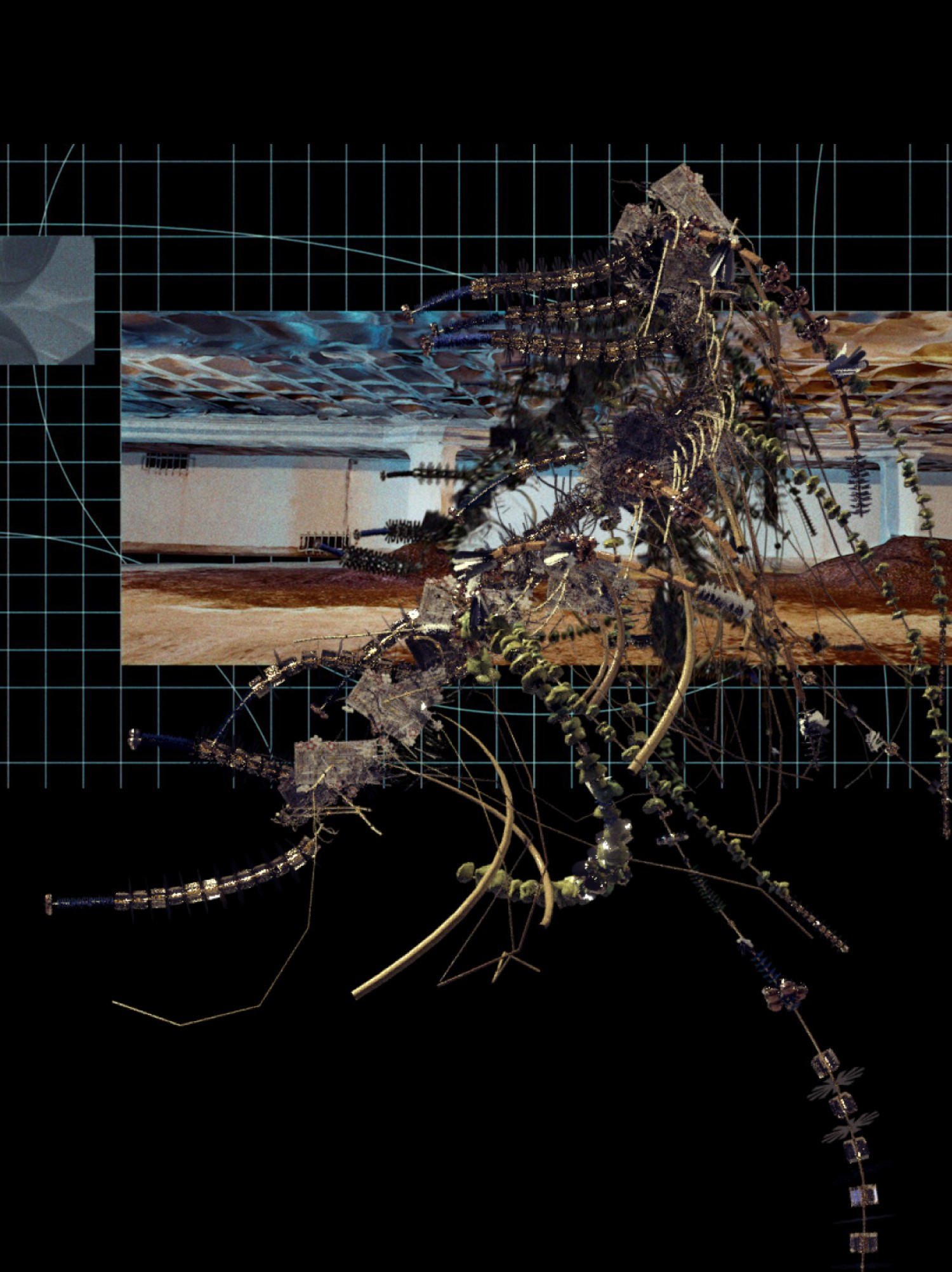
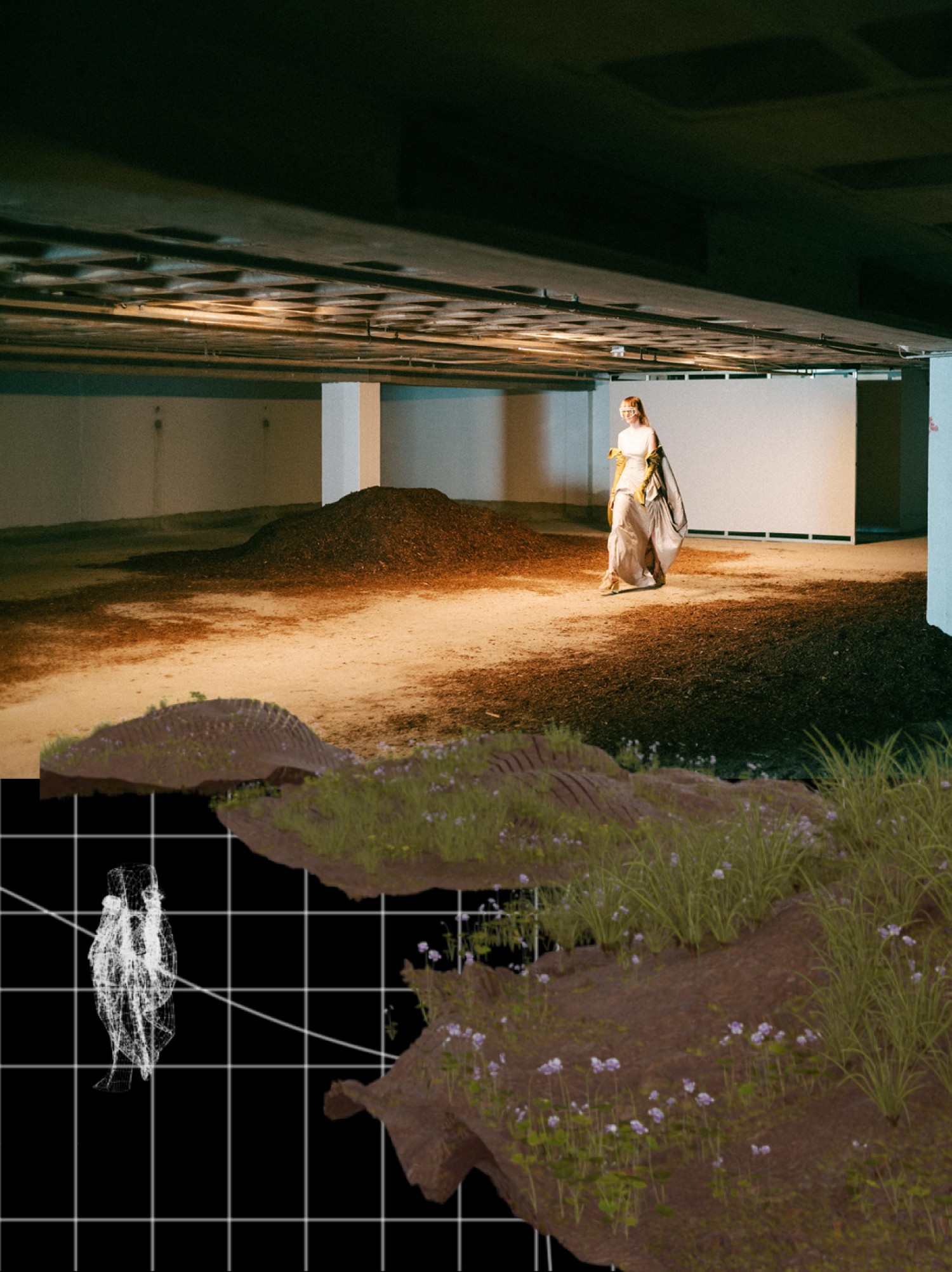
Spaces of Desire is a hybrid fashion film for Maison Taskin that lets physical garments and their digital extensions coexist in one fluid world. Together with the creative team around designer Taskin Goec and director Timo Kreitz, we contributed the invisible technical layer that makes this mixed reality believable: a detailed 3D scan of the location and high‑dynamic‑range lighting data captured on set. This digital twin of the space allowed the film’s digital artists to treat the real interior as a malleable stage-warping architecture, extending surfaces and attaching virtual structures to the garments without breaking the illusion. The result is a fashion film where viewers sense the space as real, even when it behaves impossibly.
Our Work
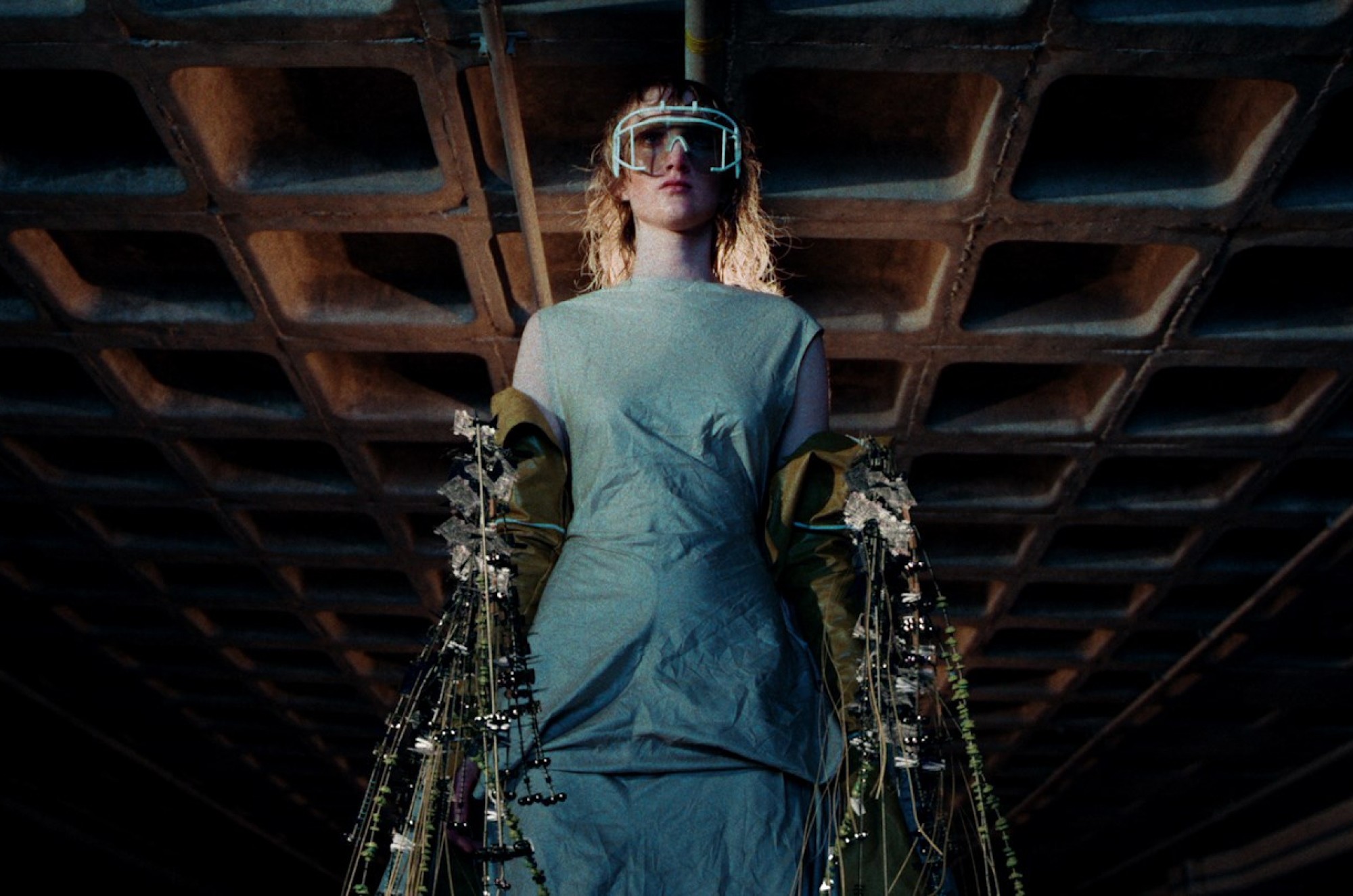
In Spaces of Desire, Maison Taskin continues its exploration of fashion that lives simultaneously in physical and digital realities. To weave those layers together on screen, the team needed the virtual garments and environments to respond to the same geometry and light as the live‑action footage. Our role was to build that bridge between the physical set and the digital pipeline.
Using a lightweight LiDAR‑based workflow, we created a highly detailed 3D scan of the location, capturing not only the overall architecture but also the small edges, steps and surfaces that interact with the garments. This scan became the basis for a clean, manipulable 3D environment. Within this digital twin, the creative team could bend walls, carve out voids or extend corridors while staying perfectly aligned with camera moves and performances.
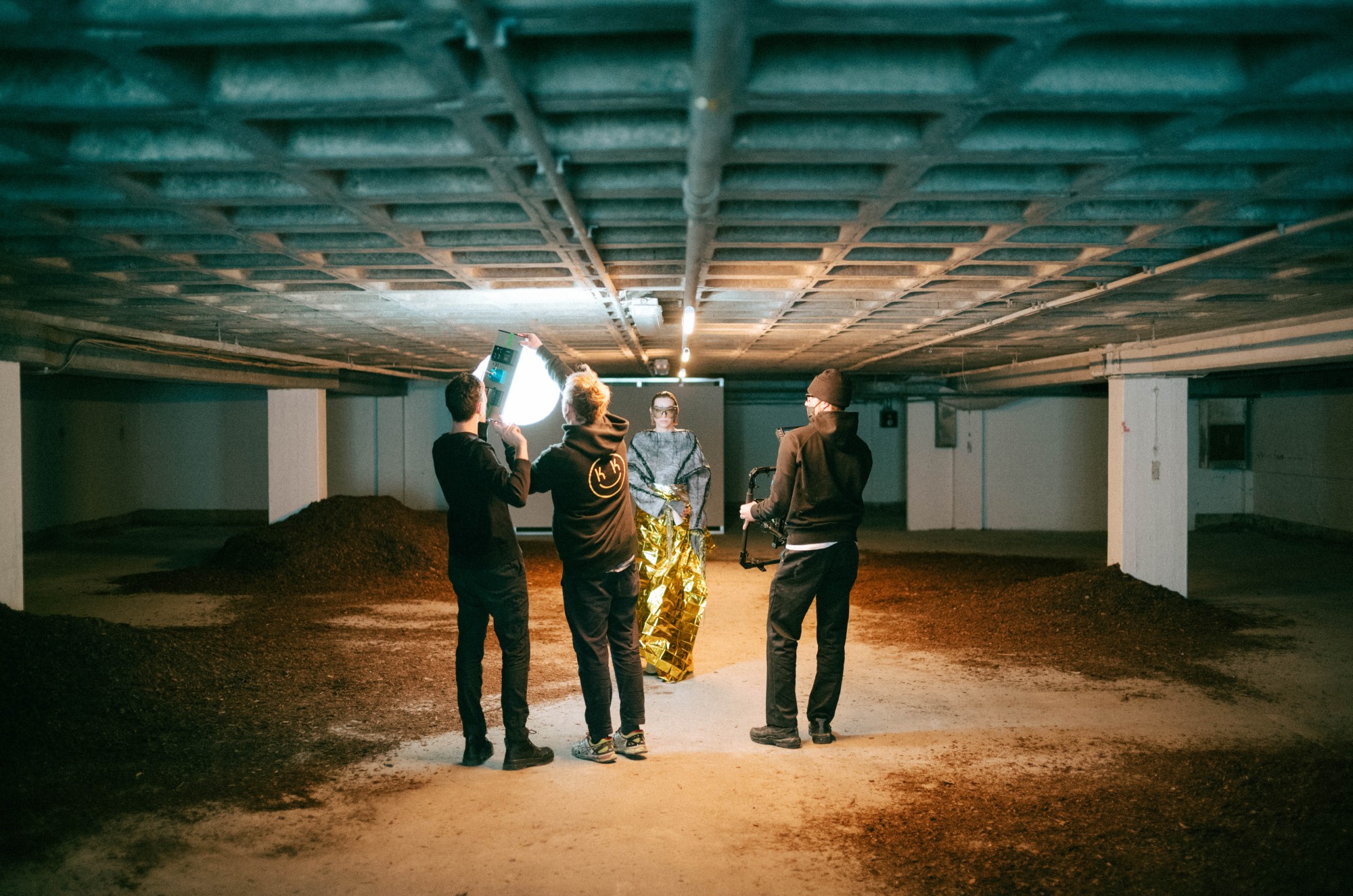
To make the digital additions sit convincingly in the footage, we also captured high‑dynamic‑range (HDR) 360 degree images at key positions across the set. By shooting multiple exposure brackets, we recorded a wide spectrum of light information – from deep shadows to bright highlights – which the 3D and compositing teams used for relighting and shading. This ensured that virtual structures attached to the garments inherited the same light direction, colour and intensity as the real scene.
In the final film, our contribution is intentionally invisible. What remains is a hybrid space in which Maison Taskin’s collection can shift from tangible couture to speculative digital shells in a single shot – rooted in a real location, yet open to a slightly uncanny technological future.
About Maison Taskin
Maison Taskin is the label of Berlin‑based digital fashion designer and conceptual artist Taskin Goec. His work bridges traditional couture techniques with a digital‑first workflow: collections are developed primarily in 3D, using simulation to shape expressive cuts and richly detailed surfaces before any physical piece is produced. This approach allows garments to exist simultaneously as physical objects and as virtual entities across online and mixed‑reality spaces, significantly reducing material waste while opening new ways to stage fashion as immersive narrative. Spaces of Desire is one of several projects in which Maison Taskin explores how our analogue and digital identities overlap and how clothing can move fluidly between those worlds.
Grounding a Hybrid Fashion Film in Precise 3D Scans and Real‑world Light.
Summary
Spaces of Desire is a hybrid fashion film for Maison Taskin that lets physical garments and their digital extensions coexist in one fluid world. Together with the creative team around designer Taskin Goec and director Timo Kreitz, we contributed the invisible technical layer that makes this mixed reality believable: a detailed 3D scan of the location and high‑dynamic‑range lighting data captured on set. This digital twin of the space allowed the film’s digital artists to treat the real interior as a malleable stage-warping architecture, extending surfaces and attaching virtual structures to the garments without breaking the illusion. The result is a fashion film where viewers sense the space as real, even when it behaves impossibly.
Our Work
In Spaces of Desire, Maison Taskin continues its exploration of fashion that lives simultaneously in physical and digital realities. To weave those layers together on screen, the team needed the virtual garments and environments to respond to the same geometry and light as the live‑action footage. Our role was to build that bridge between the physical set and the digital pipeline.
Using a lightweight LiDAR‑based workflow, we created a highly detailed 3D scan of the location, capturing not only the overall architecture but also the small edges, steps and surfaces that interact with the garments. This scan became the basis for a clean, manipulable 3D environment. Within this digital twin, the creative team could bend walls, carve out voids or extend corridors while staying perfectly aligned with camera moves and performances.
To make the digital additions sit convincingly in the footage, we also captured high‑dynamic‑range (HDR) 360 degree images at key positions across the set. By shooting multiple exposure brackets, we recorded a wide spectrum of light information – from deep shadows to bright highlights – which the 3D and compositing teams used for relighting and shading. This ensured that virtual structures attached to the garments inherited the same light direction, colour and intensity as the real scene.
In the final film, our contribution is intentionally invisible. What remains is a hybrid space in which Maison Taskin’s collection can shift from tangible couture to speculative digital shells in a single shot – rooted in a real location, yet open to a slightly uncanny technological future.
About Maison Taskin
Maison Taskin is the label of Berlin‑based digital fashion designer and conceptual artist Taskin Goec. His work bridges traditional couture techniques with a digital‑first workflow: collections are developed primarily in 3D, using simulation to shape expressive cuts and richly detailed surfaces before any physical piece is produced. This approach allows garments to exist simultaneously as physical objects and as virtual entities across online and mixed‑reality spaces, significantly reducing material waste while opening new ways to stage fashion as immersive narrative. Spaces of Desire is one of several projects in which Maison Taskin explores how our analogue and digital identities overlap and how clothing can move fluidly between those worlds.
Grounding a Hybrid Fashion Film in Precise 3D Scans and Real‑world Light.
Summary
Spaces of Desire is a hybrid fashion film for Maison Taskin that lets physical garments and their digital extensions coexist in one fluid world. Together with the creative team around designer Taskin Goec and director Timo Kreitz, we contributed the invisible technical layer that makes this mixed reality believable: a detailed 3D scan of the location and high‑dynamic‑range lighting data captured on set. This digital twin of the space allowed the film’s digital artists to treat the real interior as a malleable stage-warping architecture, extending surfaces and attaching virtual structures to the garments without breaking the illusion. The result is a fashion film where viewers sense the space as real, even when it behaves impossibly.
Our Work
In Spaces of Desire, Maison Taskin continues its exploration of fashion that lives simultaneously in physical and digital realities. To weave those layers together on screen, the team needed the virtual garments and environments to respond to the same geometry and light as the live‑action footage. Our role was to build that bridge between the physical set and the digital pipeline.
Using a lightweight LiDAR‑based workflow, we created a highly detailed 3D scan of the location, capturing not only the overall architecture but also the small edges, steps and surfaces that interact with the garments. This scan became the basis for a clean, manipulable 3D environment. Within this digital twin, the creative team could bend walls, carve out voids or extend corridors while staying perfectly aligned with camera moves and performances.
To make the digital additions sit convincingly in the footage, we also captured high‑dynamic‑range (HDR) 360 degree images at key positions across the set. By shooting multiple exposure brackets, we recorded a wide spectrum of light information – from deep shadows to bright highlights – which the 3D and compositing teams used for relighting and shading. This ensured that virtual structures attached to the garments inherited the same light direction, colour and intensity as the real scene.
In the final film, our contribution is intentionally invisible. What remains is a hybrid space in which Maison Taskin’s collection can shift from tangible couture to speculative digital shells in a single shot – rooted in a real location, yet open to a slightly uncanny technological future.
About Maison Taskin
Maison Taskin is the label of Berlin‑based digital fashion designer and conceptual artist Taskin Goec. His work bridges traditional couture techniques with a digital‑first workflow: collections are developed primarily in 3D, using simulation to shape expressive cuts and richly detailed surfaces before any physical piece is produced. This approach allows garments to exist simultaneously as physical objects and as virtual entities across online and mixed‑reality spaces, significantly reducing material waste while opening new ways to stage fashion as immersive narrative. Spaces of Desire is one of several projects in which Maison Taskin explores how our analogue and digital identities overlap and how clothing can move fluidly between those worlds.